We built Queryvine because multilingual support keeps breaking in the same two places
Language detection isn't the hard problem. Handoff quality is. We fixed the second one.
Where this came from
In 2021 and 2022, Michael Adeyemi ran support operations for a logistics company handling shipments into Brazil, Mexico, and the UAE. The company had 14 escalation workflows. None of them solved the core problem.
A ticket from an Arabic speaker would arrive at an English-speaking agent who'd spend four minutes reading a machine-translated log before understanding what the customer actually needed. The resolution time wasn't slow because of bad automation — it was slow because of bad context transfer. The agent received a conversation transcript. What they needed was a brief: customer intent, what was already tried, recommended next step, written in their language.
The first version of what became Queryvine was built as an internal tool for that handoff problem in late 2022. Not a chatbot. A context card generator. When it started deflecting 70% of tickets before they reached an agent at all — because intent classification against the existing KB was good enough to resolve them — it became clear there was a product here.
Queryvine was incorporated in Miami in 2023. The RTL support for Arabic, Hebrew, and Urdu came from those original MENA-facing customers who tested every multilingual tool available and found that correct RTL rendering was the exception, not the norm.
Three people. All came through the support ops side.
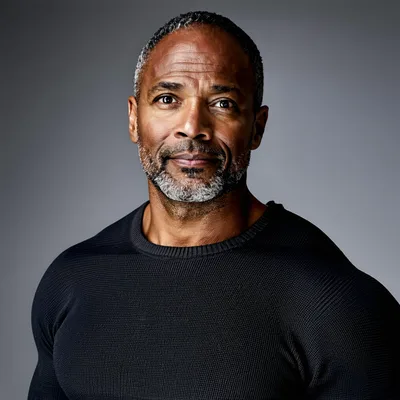
Ran support operations at logistics and e-commerce companies from 2014 to 2022, including a role managing cross-border shipment support across LATAM and MENA markets. Built the first version of the context card system as an internal tool in 2022. Founded Queryvine in 2023. Based in Miami.
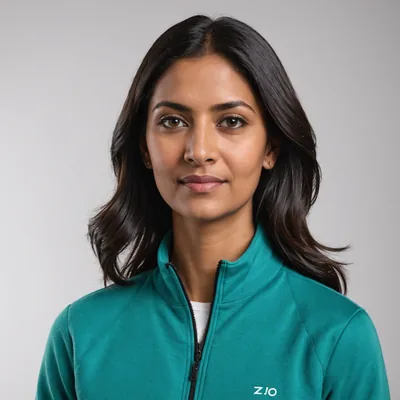
Built multilingual NLP infrastructure at two B2B software companies before joining Queryvine as co-founder. Specializes in intent classification across low-resource language pairs and low-latency inference serving. Designed the Thai word-boundary tokenization system and native RTL rendering pipeline that powers Arabic, Hebrew, and Urdu support.
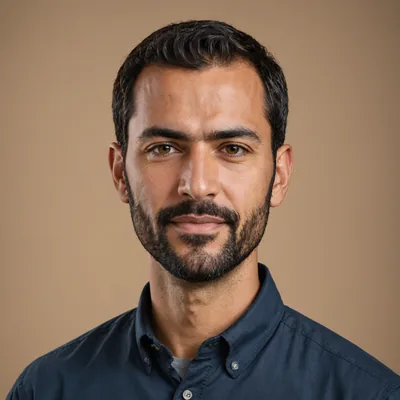
Spent five years as a Zendesk implementation specialist, onboarding support teams across logistics, fintech, and e-commerce. Knows every helpdesk routing quirk that exists. Runs customer onboarding and success at Queryvine — the person who gets you from connected helpdesk to calibrated deflection rate.
Three principles
Specific before general
We don't ship a feature unless it works correctly for Arabic and Thai, not just English. "Multilingual support" that fails RTL rendering or Thai word-boundary tokenization isn't multilingual — it's English support with a translation layer.
Ops-centric design
Every feature is reviewed by someone who has run a support team. The context card format came from watching an ops lead describe what they wished they received when a ticket escalated. We build for that person.
No dark patterns in automation
If confidence is below threshold, we escalate. We don't fake resolutions to inflate deflection metrics. The 70% figure is real — and the 30% that escalates reaches a human with a prepared brief, not a mystery transcript.
Based in Miami, supporting teams worldwide
1395 Brickell Avenue, Suite 800, Miami, FL 33131. Miami is a genuinely multilingual city — Spanish and English are both first languages here, not one primary and one translated. That shapes how we think about language parity in product decisions.
When we debate whether a feature works well in Spanish, we don't have to imagine the use case. Half the team is thinking about it from lived experience. That context matters when building tools for support operations that span LATAM, MENA, and Southeast Asia.